In September 2026 I joined Pioneer Fund as a Venture Partner. Pioneer is a seed fund of 500+ Y Combinator alumni that invests in YC startups.
I did not apply for it. I got there the other way around. Pioneer invested in OctaPulse, the company Paul Grech and I run out of Pittsburgh, while we were in the YC Winter 2026 batch. A while after that, they asked whether I wanted to help on the investing side.
So I had already sat on the founder side of their table before I sat on the other one. That ordering turns out to matter a lot.
The cookies
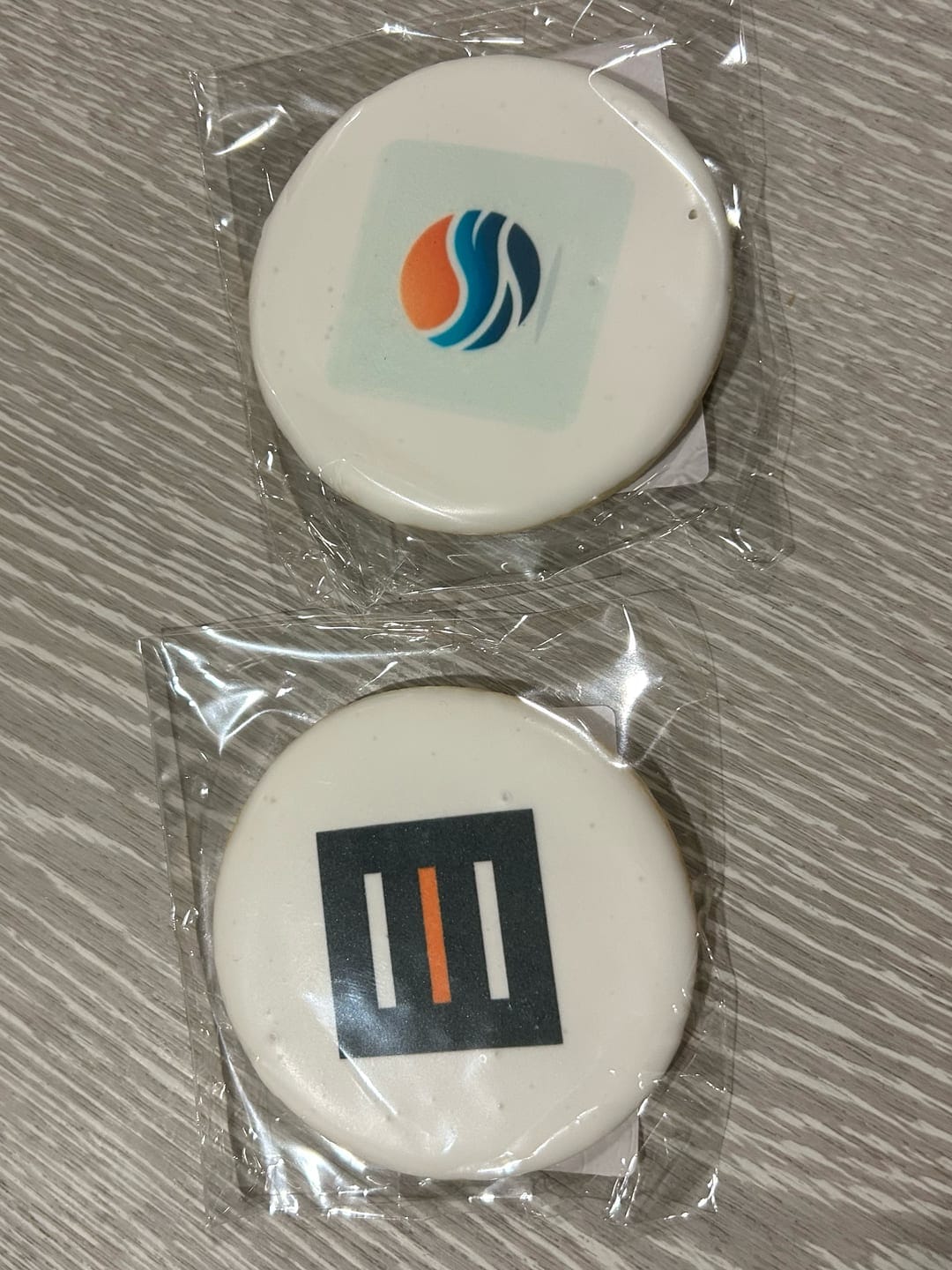
Shortly after they invested, Pioneer sent us two iced cookies. One was printed with the OctaPulse logo. The other had the Pioneer logo.
It is a small thing. It is also the kind of small thing you remember when you are a two-person hardware company and a lot of your week is spent getting to farms. Somebody on the other side of the money took the time to make it feel like a welcome instead of a transaction.
How an investor treats you after the wire is the part founders actually talk about. The process with Pioneer felt fast, thoughtful and founder-friendly, and the cookies were the same thing in edible form. That is a big part of why I said yes.
What a Venture Partner actually does
The title sounds grander than the work. The work is mostly listening carefully and writing things down.
In practice it looks like this:
- Founder calls. I join calls with founders building in my areas: robotics, computer vision, physical AI, and hardware and ML systems. I ask technical questions and send structured feedback to the fund afterwards.
- Batch reviews. A Pioneer partner and a few Venture Partners look at a handful of companies from a YC batch together. Everyone does preliminary research on every company beforehand, then we talk through them as a group.
- Portfolio help. Ad-hoc advice for companies Pioneer has already backed, usually on hardware pilots, selling into traditional industries, hiring, or fundraising.
- Introductions. Connecting founders to customers, technical people, advisors and other investors when I know someone who can help.
None of this replaces my day job. It sits alongside it.
The first thing that changes is what you notice
As a founder, I had to learn to compress. Find the one line that survives being repeated by someone who does not care about your industry. Lead with the number you can defend.
From the other side, I found myself listening for the layer underneath that line. The line tells me what a company wants to be. The second and third answers tell me what it is.
A good pitch is a handle. Diligence is checking what the handle is attached to.
What I look for in a hard-tech company
I can only be useful where I have actually been burned. For me that is robotics and computer vision in places that are wet, messy and nothing like a lab. So that is where I focus, and these are the questions I keep coming back to.
Is the perception stack real, or is it a demo?
A demo is a model that works on the clips the founder chose. A perception stack is a model plus everything around it: how images get captured, what happens when the lighting changes, what the system does when it is not sure, and how anyone would know it was wrong.
I ask what happens on the frames that fail. A team that has run in the field has a specific answer, usually involving thresholds, gating and a story about the day it broke. A team that has only run on curated data tends to answer with an accuracy number.
The accuracy number is not useless. I just want to know what it was measured against. A score against your own auto-labeller is agreement, not accuracy, and that distinction is one I had to learn to hold myself to at OctaPulse before I could ask anyone else about it.
Has it survived the field, or only the lab?
The lab is where you prove an idea works. The field is where you find out about network drops, operators whose hands get in the frame, hardware that needs to be washed down, and a customer schedule that has nothing to do with yours.
The bugs that kill hardware companies are mostly the ones you cannot reproduce at a desk. So I ask how many hours the system has run somewhere the founders do not control, and what broke first. “Nothing broke” is the answer that worries me most.
Do the unit economics work at the bill of materials?
Software founders can wave at margins. Hardware founders cannot. Every unit has a real cost, a real install, and a real support burden when it fails somewhere remote.
I want to see the BOM, the install time, and who has to physically show up when it goes down. Then I want to know whether the price the customer is paying in the pilot is the price that makes the business work at scale, or a discount that will have to be walked back.
Can it actually be manufactured?
A prototype that one founder assembled by hand is a very different object from a product a contract manufacturer can build a few hundred times. Sensor choices, enclosures, ratings and supply chain all show up here.
I do not expect a seed company to have solved manufacturing. I do expect the team to know which parts of their current design will not survive it.
Can they sell into an industry that does not buy software?
This is the one I care about most, because it is the one I live in. Agriculture, food production and other traditional industries have long sales cycles, buyers who are not technical, and very little patience for anything that interrupts operations.
I listen for whether the founders have stood in the customer’s facility, whether they know who signs the purchase order, and whether the pilot was structured to convert into a paid contract or just to produce a nice slide. Pilots that never had a path to revenue are one of the most common ways a hardware company quietly stalls.
Why I said yes
I am a first-time hard-tech founder, and a lot of people helped OctaPulse before it had earned the help.
CMU’s Swartz Center for Entrepreneurship. Innovation Works’ Robotics Factory here in Pittsburgh. Y Combinator. Pioneer. Each of them showed up for OctaPulse before there was much to show up for.
You do not get to pay those people back. You get to pay it forward.
Being a Venture Partner is one concrete way to do that. Pioneer bet on us early. Now I get to help them bet on the next wave of robotics founders.
There is also a selfish reason, and I would rather say it plainly. Sitting on calls with experienced partners is an education in what separates companies that break out from companies that stall. Every time I write feedback on someone else’s pilot structure or sensor choice, I come back and look harder at my own. It makes me a better operator at OctaPulse.
Keeping it separate from OctaPulse
I am a full-time founder first. That is not changing, and the VP work has to fit around it rather than the other way round.
The rules I hold myself to are simple:
- I recuse myself from anything involving OctaPulse. No exceptions.
- I check for conflicts before every call. If a company overlaps with what we do, I say so before the conversation starts, not after.
- Founder materials stay confidential. What a founder shares with the fund does not leave the fund, and it certainly does not end up in my own company’s planning.
- It stays on the calendar it was given. A couple of founder calls a month in my areas plus ad-hoc help is what fits next to running a company. More than that and I would be doing both badly.
I take the conflict rules seriously. I have been the founder sending a deck to investors, and I know how it feels to wonder where it ended up.
What I would tell a hard-tech founder pitching anyone
You are going to be asked the questions above, whether out loud or not. Answer them before anyone asks.
Show the failure cases next to the demo. Know your BOM. Say how many hours you have run in the field and what broke. Name the person at the customer who signs. If something is still in development, say so on the slide.
I learned all of that from the founder side first. It reads exactly the same from this side of the table.